How to write a compelling Systems Administration CV
As a career coach with over 25 years of experience supporting IT professionals across the UK, I can confidently say that a strong Systems Administration CV opens doors. Whether you are an experienced Systems Administrator or progressing from technical support into infrastructure, your CV must clearly demonstrate technical expertise, commercial awareness and measurable impact.
Start with a focused professional profile
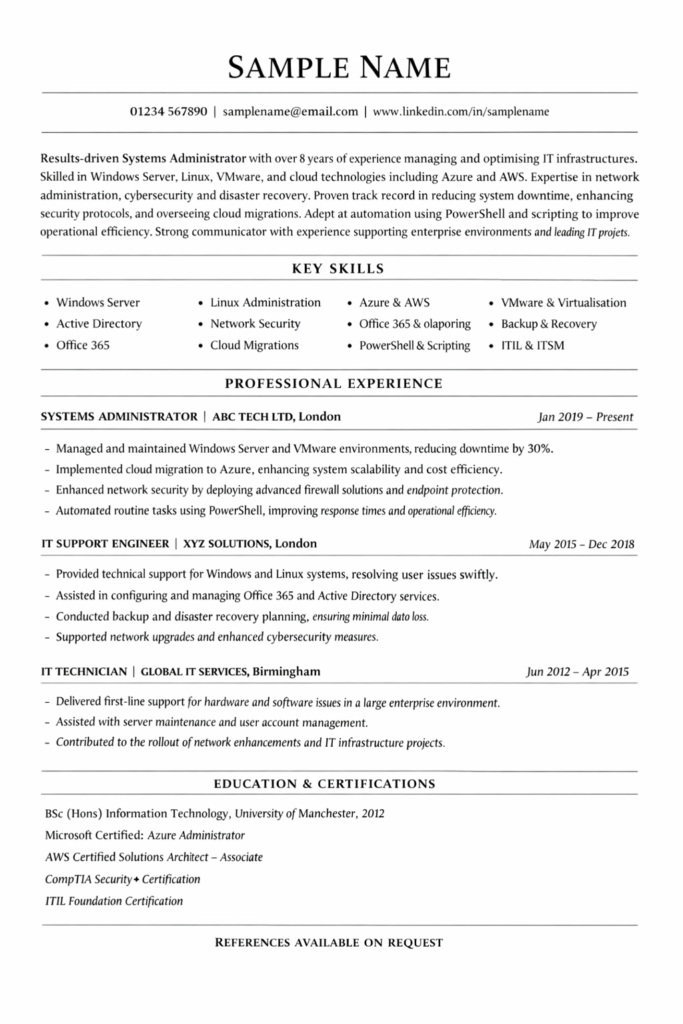
Your Systems Administration CV should begin with a concise professional profile. This short paragraph needs to highlight your years of experience, key technical strengths and the environments you have supported. Mention core areas such as IT infrastructure, network administration, Windows Server, Linux, cloud computing and cybersecurity. Recruiters search for these keywords in applicant tracking systems, so including them naturally within your profile improves visibility.
For example, reference your experience managing Active Directory, administering Azure or AWS environments, supporting VMware virtualisation or implementing automation through PowerShell and scripting. Keep it confident and forward looking. Employers want to see capability and potential.
Showcase your technical expertise clearly
A dedicated technical skills section is essential in any Systems Administration CV. Structure it in a clean and logical format. Group your skills under headings such as Operating Systems, Cloud Platforms, Virtualisation, Networking, Security, Scripting and Tools.
Include technologies such as Windows Server, Linux, Azure, AWS, VMware, Active Directory, Office 365, backup solutions, monitoring tools, firewalls and endpoint security platforms. If you have experience with automation, DevOps practices or infrastructure as code, be sure to mention it. Employers value efficiency and innovation.
Remember that clarity matters. Avoid overwhelming the reader with every tool you have ever touched. Focus on what is most relevant to the role you are targeting.
Demonstrate impact in your work experience
Your professional experience section is where your CV truly comes to life. Rather than listing duties, concentrate on achievements and outcomes. Systems Administration is about reliability, performance and security. Show how you improved these areas.
For example, explain how you reduced downtime across a data centre environment, strengthened cybersecurity controls, improved backup and disaster recovery processes, or migrated on premise systems to cloud computing platforms such as Azure or AWS. Quantify results wherever possible. Statements such as improved system uptime to 99.9 percent or reduced ticket resolution time by 30 percent demonstrate tangible value.
Highlight your experience with troubleshooting complex infrastructure issues, leading project management initiatives, implementing ITIL processes or supporting business continuity planning. Employers want Systems Administrators who can think critically and act decisively.
Include certifications and professional development
Certifications strengthen your credibility. If you hold qualifications such as Microsoft Certified, AWS Certified, Azure Administrator, CompTIA Security, Cisco or ITIL, include them clearly in a dedicated section.
Continuous professional development is particularly important in Systems Administration. Technology evolves rapidly. Demonstrating that you stay current with cloud computing, cybersecurity trends and automation tools positions you as a committed and proactive professional.
Emphasise soft skills and collaboration
While technical expertise is central to any Systems Administration CV, do not underestimate the value of soft skills. Communication, stakeholder engagement and teamwork are vital in modern IT departments.
Mention experience providing technical support to end users, collaborating with developers, working alongside project management teams or supporting senior leadership during system upgrades. Systems Administrators often bridge the gap between technical infrastructure and business operations.
Strong documentation skills, clear communication and the ability to explain complex concepts in simple language will differentiate you from other candidates.
Tailor your CV for each application
One of the most common mistakes I see is sending the same CV for every role. Carefully review the job description and align your Systems Administration CV with the employer’s priorities. If the role focuses heavily on cloud computing and Azure, ensure those keywords are prominent. If cybersecurity and compliance are central, emphasise risk management and security frameworks.
Customisation significantly increases interview success rates. It shows genuine interest and strategic thinking.
Keep formatting professional and readable
Presentation matters. Use a clean layout, consistent font and clear spacing. Aim for two pages if you have significant experience. Ensure there are no spelling or grammatical errors. A Systems Administrator is expected to demonstrate attention to detail, and your CV should reflect that.
Final thoughts from Jerry Frempong
Writing a high performing Systems Administration CV is about positioning yourself as a dependable, forward thinking IT professional who adds measurable value. With the right structure, strong keywords and evidence based achievements, you can confidently compete in today’s technology driven market.
If you would like expert support refining your CV or optimising your Linkedin profile to attract recruiters in IT infrastructure, cloud computing and cybersecurity, I would be delighted to help. Book an appointment with me or one of CVLondon’s expert CV writers today and take the next step in your career with confidence.
Your next opportunity in Systems Administration could be one powerful CV away. Let us make sure yours truly stands out.
Systems Administration CV Sample