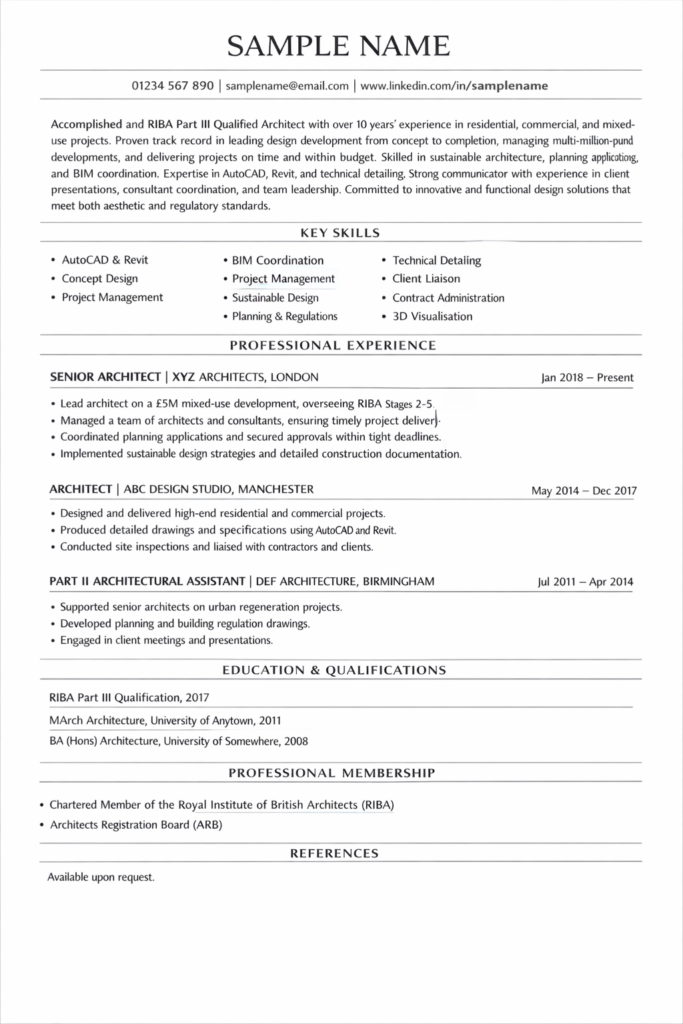
Writing an outstanding Architecture CV is about far more than listing projects and qualifications. It is about presenting your design thinking, technical expertise and professional credibility in a way that immediately inspires confidence. After more than 25 years as a UK based career coach, I have guided hundreds of architects from Part 1 graduates to senior design directors, and I can assure you that a well written CV opens doors.
The first thing to understand is that architecture is both creative and technical. Your CV must reflect this balance. Recruiters, architectural practices and property developers are looking for evidence of design flair alongside commercial awareness, project delivery and regulatory knowledge. An effective Architecture CV clearly demonstrates your value within seconds.
Start with a compelling professional profile. This short paragraph at the top of your CV should summarise your experience, specialism and career focus. Include high impact keywords such as architect, RIBA, design development, project management, sustainable design, planning permission, BIM, AutoCAD, Revit and construction documentation. Many architectural recruiters use applicant tracking systems, so incorporating relevant industry keywords improves visibility and searchability.
Your profile might highlight your years of experience, sectors worked in such as residential architecture, commercial architecture or mixed use developments, and your strengths in concept design, technical detailing or client liaison. Make it concise yet powerful. Think of it as your personal brand statement.
Next comes your professional experience. This section should not simply describe duties. It must show achievements. Employers want measurable results. For example, instead of writing responsible for design drawings, say delivered full RIBA Stage 3 and Stage 4 design packages for a twenty five unit residential scheme valued at three million pounds, achieving planning approval within twelve weeks. That level of detail demonstrates competence, scale and impact.
When writing your work history, include project value, size, timelines and your level of responsibility. Did you lead a team. Did you coordinate consultants. Did you manage client presentations. Did you oversee site inspections. These are critical indicators of seniority. Architecture recruitment is competitive, so clarity matters.
Technical skills deserve their own section. Architecture practices look for proficiency in design software and digital modelling. Clearly list AutoCAD, Revit, SketchUp, BIM coordination, Adobe Creative Suite, and any experience with sustainable design standards or UK Building Regulations. If you are experienced in contract administration or CDM regulations, say so. These details increase your credibility.
Education and professional membership are also essential. Include your degree, university, and any distinctions. If you are registered with the Architects Registration Board or a member of RIBA, this should be clearly stated. For Part 2 or Part 3 candidates, make your status transparent. Employers appreciate honesty and clarity regarding qualification level.
Portfolio integration is another important consideration. While your portfolio is separate, your CV should reference key projects that demonstrate range. You might briefly mention urban regeneration schemes, heritage refurbishments, commercial fit outs or sustainable housing developments. Align your CV with the type of roles you are targeting.
Do not underestimate the importance of layout. Architecture is a visual profession. Your CV must look polished and well structured. Use clean formatting, consistent spacing and professional typography. Avoid clutter. Two pages is ideal for most architects in the UK. Ensure there are no spelling or grammar errors. Attention to detail reflects professional standards.
Tailoring your Architecture CV for each application is one of the most powerful strategies you can adopt. Study the job description carefully. Identify keywords and competencies. Reflect those requirements back in your CV authentically. This alignment increases interview success dramatically.
Another vital element is commercial awareness. Many architects focus purely on design. Yet practices operate as businesses. Demonstrate your understanding of budgets, procurement routes, stakeholder management and delivery deadlines. Showing that you appreciate both creative and financial dimensions sets you apart.
Finally, always include soft skills. Communication, collaboration, leadership and problem solving are crucial in architecture. Projects succeed through teamwork. If you have mentored junior architects, coordinated engineers or presented to planning committees, make this visible.
Writing a strong Architecture CV is not about exaggeration. It is about clarity, confidence and positioning. When structured effectively, your CV tells a compelling story of growth, capability and ambition.
I am Jerry Frempong, a UK based career coach with over 25 years of experience helping professionals secure interviews and promotions. Through my work with CVLondon, I have supported architects across London and the wider UK to refine their CVs, strengthen their LinkedIn profiles and stand out in a competitive market. As Jerry Frempong, I believe every talented architect deserves a CV that reflects their true potential.
If you are serious about advancing your architecture career, I invite you to take the next step. Book a personalised consultation and let us transform your CV and LinkedIn profile into powerful marketing tools that win interviews and elevate your professional brand.
Secure your appointment today at https://www.cvlondon.net/book-an-appointment/ and allow one of our expert CV writers to help you move confidently towards your next architectural opportunity. Your future projects deserve it, and so do you.
Architecture CV Sample