How to write a compelling Food Science CV
As a UK based career coach with over 25 years of experience, I have supported countless professionals across food technology, product development, quality assurance and regulatory affairs to secure exceptional roles. Writing a strong Food Science CV is not about listing duties. It is about presenting your scientific expertise, commercial awareness and measurable impact in a way that immediately reassures employers that you can add value.
The food industry is competitive and highly regulated. Recruiters and hiring managers want to see evidence of technical capability, compliance knowledge and innovation. Your CV must therefore be tailored, keyword rich and achievement focused to stand out in applicant tracking systems and with human decision makers.
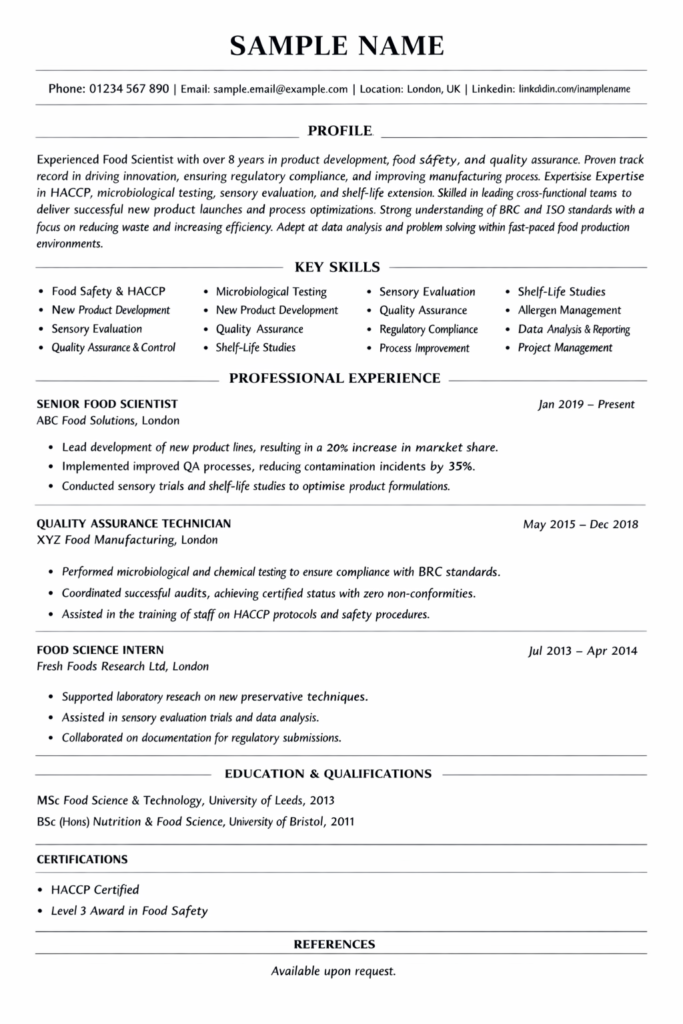
Start with a strong professional profile
Your professional profile sits at the top of your CV and acts as your executive summary. In four to six lines, clearly state your specialism within food science, such as food microbiology, sensory analysis, food safety, new product development or nutritional science. Include your years of experience, your highest qualification and the types of environments you have worked in, for example manufacturing, laboratory research or retail food production.
Use powerful keywords naturally within this section, such as food safety standards, HACCP, BRC compliance, product formulation, quality control, laboratory analysis, regulatory compliance and food innovation. These terms improve your visibility in searches and immediately position you as a credible Food Science professional.
Highlight key skills relevant to Food Science
After your profile, include a key skills section. This is particularly important for applicant tracking systems. Focus on technical skills and industry specific knowledge. Examples include microbiological testing, shelf life studies, sensory evaluation, nutritional analysis, allergen management, ISO standards, food legislation, data analysis, statistical software and risk assessment.
Balance technical expertise with soft skills. Employers in the UK food sector value collaboration, problem solving, project management and stakeholder communication. If you have worked cross functionally with production teams, marketing departments or external suppliers, make this clear.
Showcase achievements not responsibilities
One of the most common mistakes I see is candidates listing job descriptions rather than results. Instead of stating that you were responsible for quality assurance, demonstrate what you achieved. For example, explain how you improved production efficiency, reduced contamination incidents, launched a successful new product or strengthened compliance procedures.
Quantify your achievements wherever possible. You might reference percentage improvements, cost savings, reductions in waste, successful audits or increased product shelf life. Numbers create credibility and show commercial awareness, which is highly valued in food manufacturing and research roles.
Detail your professional experience strategically
List your roles in reverse chronological order. For each position, include your job title, organisation, location and dates of employment. Under each role, provide a concise overview of your remit followed by bullet points outlining measurable achievements.
If you are early in your Food Science career, include relevant internships, placements or research projects. Practical laboratory experience and exposure to food production environments are extremely attractive to employers.
Education and professional development
Food Science is a qualification led profession. Clearly state your degree, such as BSc or MSc in Food Science, Food Technology, Nutrition or a related discipline. Include the institution and year of completion. If you have completed specialist certifications in food safety, HACCP training or advanced laboratory techniques, feature these prominently.
Continuous professional development demonstrates commitment. Membership of relevant professional bodies and attendance at industry conferences or workshops can also enhance your credibility.
Optimise your CV for UK recruiters
In the UK, a Food Science CV should typically be two pages. Keep formatting clean and professional. Avoid graphics or excessive design elements. Ensure your document is easy to scan with clear headings and consistent spacing.
Tailor your CV for each application. Study the job description and align your skills and achievements with the employer’s priorities. If the role emphasises regulatory compliance, bring this to the forefront. If it focuses on product innovation, highlight your new product development experience.
Do not overlook LinkedIn
Recruiters in the food industry frequently search LinkedIn for talent. Ensure your LinkedIn profile mirrors your CV in terms of keywords and positioning. Use a compelling headline that reflects your specialism in Food Science and include detailed achievements within your experience section.
A strong LinkedIn presence can significantly increase your visibility to employers, recruitment agencies and headhunters operating within the UK food sector.
Final thoughts from Jerry Frempong
Writing a powerful Food Science CV is about confidence and clarity. You have invested years in developing technical expertise and scientific knowledge. Your CV must communicate that value persuasively and professionally.
If you would like expert guidance to refine your Food Science CV and elevate your LinkedIn profile, I would be delighted to help. Book a personalised consultation with me or one of CVLondon’s expert CV writers today and take the next step in your career with confidence.
Secure your appointment here
https://www.cvlondon.net/book-an-appointment/
Food Science CV Sample