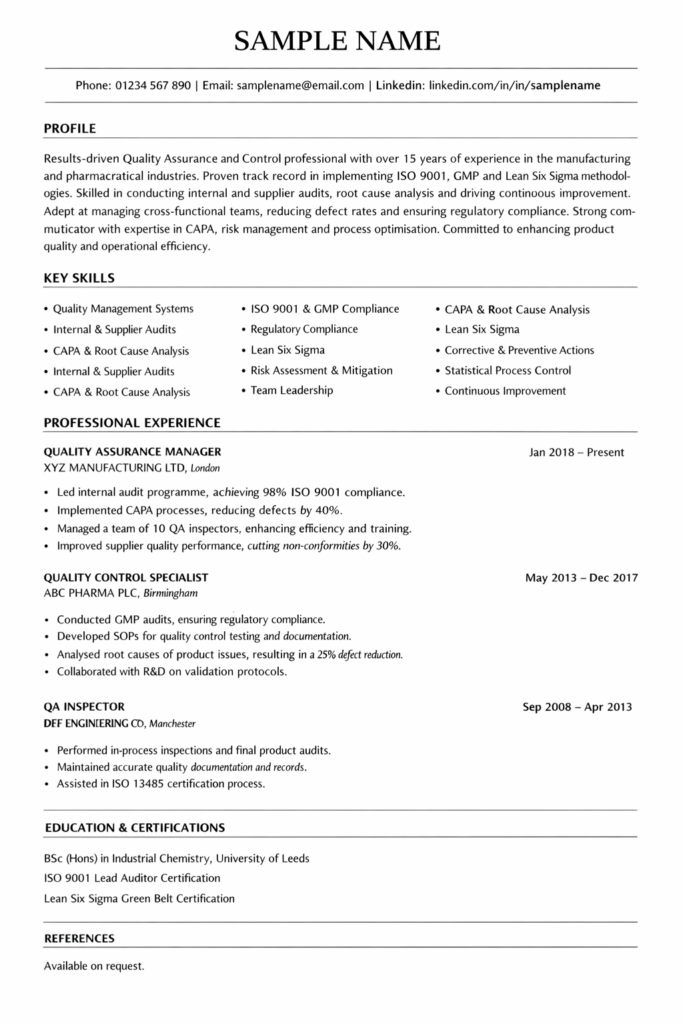
Writing a compelling Quality Assurance and Control CV is about far more than listing inspections and compliance checks. After more than twenty five years as a UK career coach and professional CV writer, I can confidently say that the strongest Quality Assurance CVs combine technical credibility, commercial awareness and measurable impact. When written correctly, your CV should position you as a guardian of standards, a driver of continuous improvement and a trusted partner to operations and leadership teams.
The first principle in creating an outstanding Quality Assurance and Control CV is clarity of positioning. Are you a Quality Assurance Manager, Quality Control Inspector, QA Engineer, Compliance Officer or Head of Quality? Your professional title should immediately reflect your target role within the quality management sector. Recruiters and hiring managers scan CVs quickly, so your headline must align with the job description and contain strong industry keywords such as quality assurance, quality control, ISO 9001, GMP, auditing, regulatory compliance, risk management and continuous improvement.
Your professional profile should sit at the top of your CV and act as your executive summary. In four to six lines, outline your years of experience, sector expertise and core strengths. If you have worked within manufacturing, pharmaceuticals, engineering, food production, construction or logistics, state this clearly. Mention quality management systems, internal audits, supplier audits, root cause analysis, CAPA, Lean Six Sigma and process improvement if relevant. This section is your opportunity to ensure your CV is optimised for applicant tracking systems while still reading naturally and confidently.
Next, focus on your key skills. A well structured Quality Assurance and Control CV will include a core competencies section that reflects both technical and behavioural expertise. Examples include quality management systems, ISO standards implementation, regulatory compliance, data analysis, statistical process control, documentation control, non conformance management, corrective and preventive actions, risk assessment, stakeholder engagement, supplier quality management and team leadership. Tailor this section carefully to the role you are applying for.
When writing your professional experience, always prioritise achievements over duties. Many candidates simply describe their responsibilities, but what employers want to see is measurable impact. Instead of writing that you conducted internal audits, explain that you led internal audits across multiple departments, achieving full ISO 9001 compliance and reducing non conformities by thirty percent. Rather than stating that you monitored quality control processes, demonstrate how your interventions improved product quality, reduced waste or increased customer satisfaction scores.
In the Quality Assurance and Control sector, numbers carry weight. Include metrics such as percentage improvements, cost savings, reduction in defects, audit success rates, turnaround times and compliance ratings. If you implemented a quality management system, explain the scale and the results. If you managed a team of quality inspectors or engineers, quantify the size of the team and the outcomes achieved. This evidence builds credibility and sets you apart from other applicants.
Education and professional development are also crucial in this field. Include degrees in engineering, science or manufacturing where applicable. Highlight certifications such as ISO 9001 Lead Auditor, Lean Six Sigma Green Belt or Black Belt, NEBOSH or other relevant compliance and regulatory training. Continuous professional development is highly valued in quality assurance roles, so demonstrate that you remain current with evolving industry standards and best practice.
Do not overlook soft skills. Effective Quality Assurance professionals must influence stakeholders, communicate findings clearly and manage change diplomatically. Mention your ability to collaborate cross functionally, present audit findings to senior leadership and train operational teams in quality standards. These competencies are particularly important for senior quality management roles.
Your CV structure should be clean, professional and easy to navigate. Use clear section headings, consistent formatting and concise language. Avoid dense paragraphs and unnecessary jargon. A two page CV is typically appropriate for most Quality Assurance and Control professionals in the UK. Ensure your CV is tailored to each application rather than using a generic template.
Finally, align your CV with your LinkedIn profile. Employers often review both. Your LinkedIn should reinforce your expertise in quality assurance, regulatory compliance, quality control and continuous improvement. Consistency across platforms strengthens your professional brand and enhances your visibility in recruiter searches.
Writing a powerful Quality Assurance and Control CV is entirely achievable when you understand how to combine strategic positioning, measurable results and sector specific keywords. With the right approach, your CV will not only pass applicant tracking systems but also resonate with hiring managers seeking high calibre quality professionals.
If you are serious about securing interviews and progressing your career in quality assurance, I would be delighted to help. At CVLondon, we specialise in crafting interview winning CVs and optimised LinkedIn profiles that truly reflect your value. Book an appointment today with me, Jerry Frempong, or one of our expert CV writers and take the next confident step in your career https://www.cvlondon.net/book-an-appointment/. Your future in quality management deserves nothing less than excellence.
Quality Assurance and Control CV Sample